

The Akali-BJP Era: Diversification Announced, Not Delivered
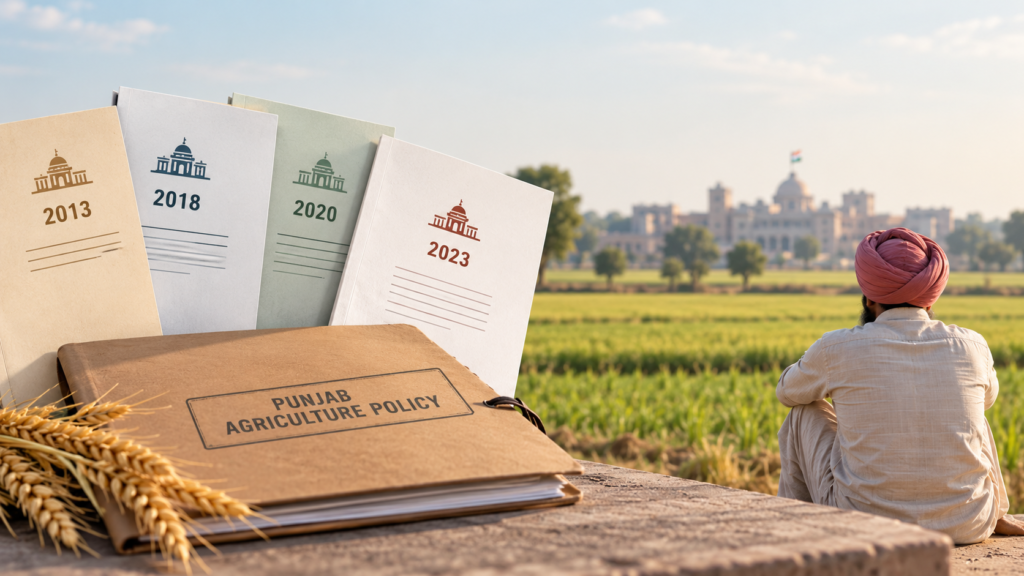
Even before the Akali-BJP alliance returned for a second consecutive term in 2012, Punjab’s groundwater crisis had already been recorded. The government had promised crop diversification in its election campaign. It began a diversification program in 2013 and a detailed draft was prepared under the guidance of agricultural scientist Dr G S Kalkat in the same year.
The draft aimed to shift paddy area in over exploited and critical blocks to maize, cotton, oilseeds and pulses. It was adopted as a full policy, but never implemented.” Contrary to the government’s stated intent, the area under paddy kept increasing.
What delayed it? The oft-quoted reason is that it suggested removing the power subsidy, installing meters, recovering bills and fixing a price for water. The target was a 40 per cent cut in paddy area in five to seven years. The cost of incentivising farmers was estimated at Rs 5,300 crore. The finance minister of the time said the treasury was empty. The draft also did not address how much demand there was for alternative crops, and where that demand would come from.
The Congress Era: A Loan Waiver in Place of Reform
Congress realised in the 2017 elections that diversification was a long haul. Instead it offered a complete waiver of farm debt. In practice, only a small fraction was delivered: of around Rs 1 lakh crore in debt, Rs 4,624 crore was written off.
Under Ajay Vir Jakhar, the government had a farm policy prepared in 2018. It suggested a phased withdrawal of power subsidy by charging Rs 100 per horsepower per month from farmers having holdings of over 4 hectares. It also suggested breaking the paddy-wheat cycle, promoting orchards and vegetables, building processing industries through FPOs and reviving contract farming.
The gap was the same as ever. Any transition reduces farm income for a while. Who fills that gap and for how long? The suggestions were long term and no timeline and FPOs and contract farming had already struggled”. The Centre’s food parks didn’t help much either. Somewhere in a government department the report got lost.
In 2020 during COVID time, another committee was formed by the government under Montek Singh Ahluwalia for revival of farm incomes and the agriculture dependent state economy. That report never got implemented either.
The AAP Era: The Most Detailed Draft, Still on the Shelf
The Aam Aadmi Party had promised a farm policy, higher farm incomes and MSP on every crop ahead of the 2022 elections. It was an 11-member committee headed by Dr Sukhpal Singh. The nearly 200-page draft was kept away from public view in September 2023. It was only after farmers raised the issue in the Vidhan Sabha session that it was released in September 2024.
It suggested Rs 1,000 crore be set aside for MSP, to be shared with the Center. It pointed to a large new marketing and research infrastructure that would have to be created from scratch. It failed to sufficiently take into account the state’s finances. For marketing it recommended opening trade through the Pakistan land route which was outside the purview of the State Government. He did not say where the government will sell off what it buys on the MSP, as this would require new departments to be created first.
The deeper problem was method. The draft got into a long document as the government sought written suggestions from farmers, academics and NRIs and these were more or less compiled together. Nobody tried out whether each idea could be executed. A better process would have taken that suggestion back to the contributors and said, “You made this suggestion, how do you propose to implement it?”
In 2023, the government also paid Rs 5.32 crore to Boston Consulting Group for a farm policy with the first report expected in December 2023. It has not yet been made public.
The Supreme Court Committee
In 2022, the Supreme Court formed a committee to examine whether a legal guarantee for MSP should be created. Four years on, its findings are not publicly known. Its members include people who regularly comment on agriculture in newspapers, on television and on farmer platforms. Those who are quick to question governments should also explain publicly where this report stands. If their advice is not being heard, transparency would serve farmers better than silence.
Table 1: Four Drafts at a Glance
| Year | Government | Committee / Author | Key proposals | Why it stalled |
| 2013 | Akali-BJP | Dr. G. S. Kalkat | 40% paddy area cut in 5-7 years; end power subsidy; meters; water pricing; Rs 5,300 crore cost | Political cost of ending subsidy; treasury constraints; no demand plan for alternative crops |
| 2018 | Congress | Ajay Vir Jakhar | Rs 100/HP/month for farms above 4 ha; break paddy-wheat cycle; orchards, vegetables; FPOs; contract farming | No timeline; no income-gap compensation; FPOs and contract farming had already struggled |
| 2020 | Congress | Montek Singh Ahluwalia | Revival of farm incomes and state economy | Report not taken forward |
| 2023 | AAP | Dr. Sukhpal Singh (11 members) | About 200 pages; Rs 1,000 crore MSP fund; marketing and research infrastructure | Ignored state finances; jurisdiction issues; released only after a year; implementation roadmap missing |
Table 2: Why Punjab Agriculture Policy Keeps Failing
| Structural weakness | What happens | What is needed |
| Vote-driven choices | Reforms like power pricing are avoided | Cross-party consensus on a long-term roadmap |
| No funding plan | Costs of Rs 5,300 crore and more have no source | Costed policy with Centre-state financing |
| Missing market for alternatives | Farmers fear selling maize, cotton or pulses | Assured procurement and processing before diversification |
| Narrow consultation | Committees rely on five to seven senior experts | Wider, implementation-focused consultation |
| Report not made public or debated | Policy never reaches the Assembly | Mandatory tabling and discussion within a fixed period |
| No accountability | No one answers for a shelved report | Timelines and annual public progress reports |
Conclusion
“Every chief minister knows that without agriculture, Punjab has nothing to fall back on. There is no question of intent. What is needed is the courage to move away from vote-driven decisions and make an agriculture policy for Punjab for the long-term good where both farmers and government can be seen as winners.
But there’s one more lesson. When governments do set up committees, they often limit themselves to a few senior voices. Therefore, no report offers any fresh ideas which can be implemented in Punjab’s present financial reality. Again, the next draft will suffer the same fate as the last four, until reports are costed, debated and tied to timelines.
Frequently Asked Questions
Four major drafts: the Kalkat draft (2013), the Jakhar policy (2018), the Ahluwalia committee report (2020) and the Sukhpal Singh draft (2023). A Boston Consulting Group report was also commissioned in 2023.
It proposed ending the power subsidy, installing meters and pricing water, which were politically difficult. It also carried a Rs 5,300 crore cost the treasury could not support, and had no plan for demand for alternative crops.
Against farm debt of roughly Rs 1 lakh crore, about Rs 4,624 crore was written off.
A draft of nearly 200 pages under Dr. Sukhpal Singh, including a Rs 1,000 crore fund for MSP shared with the Centre and large new marketing and research infrastructure.
Alternative crops lack assured markets and procurement. Farm income also dips during any transition, and no policy so far has clearly explained who bridges that gap and for how long.
A costed plan, cross-party consensus, assured markets for alternative crops, wider consultation, mandatory debate in the Vidhan Sabha and a public timeline with annual progress reports.
Formed in 2022 to examine a legal guarantee for MSP, its findings are not publicly known.